


Dental Health Vitamins
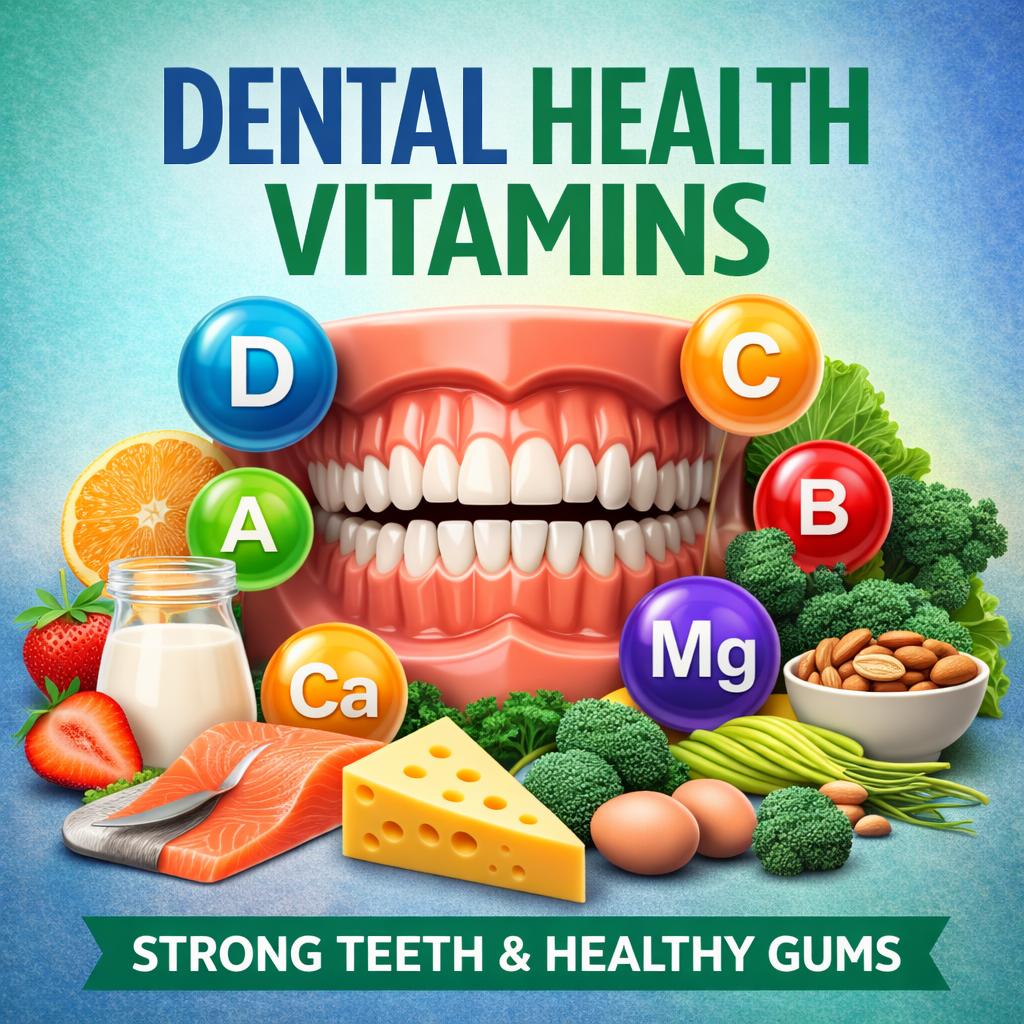
Maintaining strong teeth and healthy gums requires more than just brushing and flossing; it depends heavily on proper nutrition. Dental Health Vitamins play a crucial role in supporting oral structures, preventing decay, and promoting gum tissue health. By understanding the key vitamins for strong teeth and minerals for healthy gums, you can ensure your smile remains strong and healthy. This guide explores essential nutrients for oral health, how they work, and the best dietary sources to include in your daily routine.
Why Nutrition Matters for Oral Health
Nutrition is a fundamental part of nutrition and dental disease prevention. Deficiencies in key vitamins and minerals can weaken tooth enamel, reduce gum resilience, and increase the risk of cavities and gum disease. Medical studies in Medical Nutrition Therapy in dentistry emphasize that proper nutrient intake supports both teeth and gum health.
Key benefits include:
- Strengthened tooth enamel
- Improved gum tissue resilience
- Reduced inflammation and risk of gingivitis
- Enhanced healing of oral tissues
- Overall prevention of dental diseases
Understanding the role of nutrients in oral health is important, but combining it with proper preventive strategies ensures the best outcomes. A recent study on dental caries risk and preventive strategies highlights how awareness and preventive care significantly improve oral health in patients undergoing dental treatments.
Essential Vitamins for Strong Teeth
1. Vitamin D for Calcium Absorption
Vitamin D plays a crucial role in vitamin D absorption for calcium, which directly supports calcium for teeth strength. Without adequate vitamin D, even a calcium-rich diet may not effectively strengthen teeth. Sources include:
- Fatty fish (salmon, mackerel)
- Fortified dairy products
- Egg yolks
- Sunlight exposure
2. Vitamin C for Gum Healing
Vitamin C for gum healing is essential for maintaining gum tissue health and preventing bleeding or inflammation. Deficiency can lead to weakened connective tissue and increased risk of gum disease. Key sources:
- Citrus fruits (oranges, lemons)
- Strawberries
- Bell peppers
- Broccoli
3. Vitamin A and Beta-Carotene
Vitamin A promotes healthy saliva flow, which naturally protects teeth from decay. It also supports gum tissue health nutrition. Sources include:
- Carrots and sweet potatoes
- Leafy greens
- Liver and dairy products
4. B-Complex Vitamins
B vitamins, especially B2 and B12, support gum and oral mucosa health. Deficiency may cause inflammation, sores, or tongue discomfort. Include:
- Eggs
- Lean meats
- Fortified cereals
- Dairy products
Essential Minerals for Healthy Gums and Teeth
1. Calcium
Calcium for teeth strength is crucial for strong enamel and jawbone density. Without adequate calcium, teeth become more prone to decay and fractures. Sources:
- Milk and yogurt
- Cheese
- Leafy green vegetables
2. Phosphorus
Phosphorus works with calcium to strengthen teeth and bones. Found in:
- Fish
- Poultry
- Eggs
- Nuts and seeds
3. Magnesium
Supports bone density and aids in maintaining healthy tooth structure. Sources:
- Spinach
- Almonds
- Dark chocolate
- Whole grains
4. Fluoride
Fluoride strengthens enamel and prevents demineralization. Common sources:
- Fluoridated water
- Toothpaste with fluoride
- Certain teas and seafood
How Vitamins and Minerals Work Together
A balanced diet rich in these vitamins and minerals ensures that teeth and gums remain strong. For example:
- Calcium and Vitamin D work together to fortify enamel.
- Vitamin C supports collagen formation in gums.
- Magnesium and Phosphorus reinforce the structure of teeth.
Incorporating these nutrients can significantly enhance the effectiveness of your oral hygiene routine and prevent long-term issues.
Practical Tips for Daily Nutrient Intake
- Eat a variety of fruits and vegetables for vitamins and antioxidants.
- Include dairy and fortified foods for calcium and vitamin D.
- Incorporate nuts, seeds, and lean proteins for essential minerals.
- Stay hydrated and maintain saliva production to naturally protect teeth.
For more information on protecting your teeth from cavities while maintaining good nutrition, explore cavity prevention strategies that complement your intake of Dental Health Vitamins.
The role of Dental Health Vitamins cannot be overstated when it comes to strong teeth and healthy gums. Ensuring proper intake of vitamins for strong teeth, minerals for healthy gums, and other essential nutrients for oral health can prevent dental diseases, promote gum healing, and strengthen enamel. Coupled with routine dental care and preventive strategies, these nutrients create a foundation for a lifetime of oral health.
FAQs
- Which vitamins are good for teeth and gums?
Vitamin D, C, A, B-complex, and calcium-rich foods are essential for strong teeth and healthy gums. - Best nutrients for strong teeth naturally?
Calcium, phosphorus, magnesium, vitamin D, and vitamin K are key nutrients for natural enamel strength. - How vitamins improve dental health?
Vitamins support enamel strength, gum healing, and reduce the risk of decay and inflammation. - Foods rich in calcium for teeth?
Dairy products, leafy greens, fortified plant-based milks, and almonds are top sources. - Vitamin deficiency and gum disease?
Deficiency in vitamin C, D, and calcium can lead to weak gums, bleeding, and increased risk of periodontitis. - Natural vitamins for healthy gums?
Vitamin C, A, and B-complex vitamins from natural foods support gum tissue health. - Minerals that strengthen tooth enamel?
Calcium, phosphorus, magnesium, and fluoride help maintain strong enamel. - Diet for strong teeth and healthy gums?
Include a mix of dairy, leafy vegetables, fruits, nuts, seeds, lean proteins, and vitamin-fortified foods.