


Diet and Tooth Decay: Can Poor Diet Damage Your Teeth?
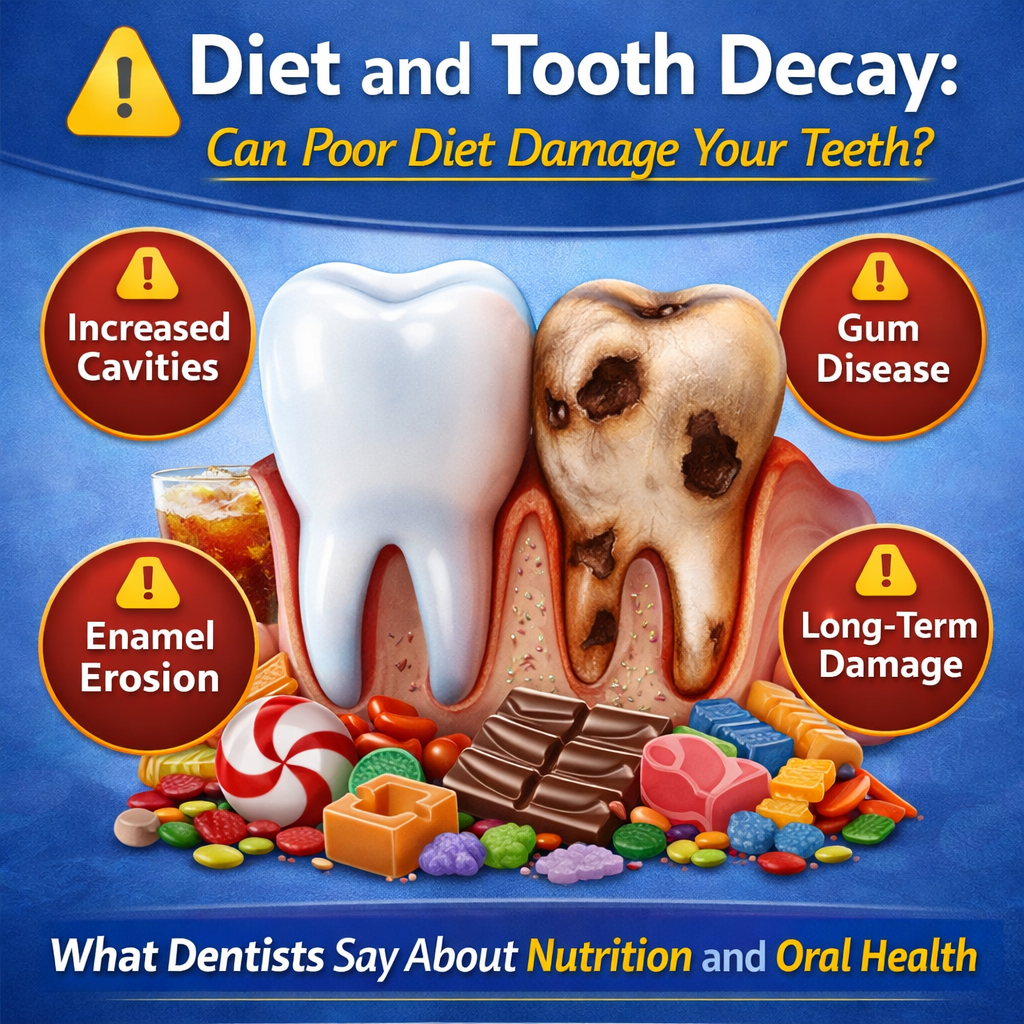
When it comes to maintaining a healthy smile, brushing and flossing are often the first things that come to mind. However, many people overlook one crucial factor—Diet and Tooth Decay. The food you eat plays a major role in determining your oral health. Dentists consistently emphasize that poor eating habits can directly lead to cavities, gum disease, and long-term dental issues.
So, can your daily diet really harm your teeth? Let’s explore what dentists say about the connection between nutrition and oral health.
How Diet Affects Teeth and Overall Oral Health
Understanding how diet affects teeth is essential if you want to prevent dental problems. Every time you eat or drink, your teeth are exposed to different substances—some beneficial, others harmful.
Key Ways Diet Impacts Oral Health:
- Provides nutrients that strengthen enamel
- Feeds harmful bacteria in the mouth
- Influences saliva production
- Affects gum health and tissue repair
An unhealthy diet dental problems cycle often begins when sugary and acidic foods become a regular part of your meals. Over time, this leads to enamel erosion and tooth decay.
The Link Between Sugar and Tooth Decay
One of the biggest culprits behind cavities is the strong connection between sugar and tooth decay. Dentists agree that sugar is the primary fuel for harmful oral bacteria.
What Happens When You Eat Sugar?
- Bacteria in your mouth feed on sugar
- They produce acids as a byproduct
- These acids attack tooth enamel
- Repeated exposure leads to cavities
This process highlights the role of bacteria and sugar teeth damage, which is why limiting sugar intake is critical for maintaining healthy teeth.
Foods Causing Tooth Decay You Should Watch Out For
Not all foods are equal when it comes to oral health. Some items significantly increase the risk of cavities.
Common foods causing tooth decay:
- Sugary snacks (candies, chocolates)
- Carbonated soft drinks
- Sticky foods like caramel and dried fruits
- Refined carbohydrates (white bread, chips)
- Acidic foods and beverages
These are also considered cavity causing foods, especially when consumed frequently without proper oral hygiene.
Unhealthy Diet Dental Problems: What Dentists Observe
Dentists often see patients suffering from issues directly linked to poor dietary habits. The most common unhealthy diet dental problems include:
- Tooth decay and cavities
- Gum inflammation and bleeding
- Enamel erosion
- Bad breath (halitosis)
- Increased plaque buildup
The diet impact on oral health becomes more severe when combined with irregular brushing and lack of dental check-ups.
Role of Dietetics in Dentistry
Modern dental care goes beyond cleaning and fillings. The concept of Dietetics in dentistry focuses on how nutrition can prevent and manage oral diseases.
Why Dietetics Matters:
- Helps identify harmful eating habits
- Supports preventive dental care
- Improves recovery after treatments
- Reduces risk of chronic oral conditions
Dentists today often recommend personalized nutrition plans as part of comprehensive dental care.
Diet Consultation for Oral Health: Why It’s Important
A professional Diet consultation for oral health can help you understand what to eat and what to avoid for stronger teeth and gums.
Benefits of Diet Consultation:
- Customized diet plans for dental health
- Guidance on reducing sugar intake
- Recommendations for tooth-friendly foods
- Prevention of future dental issues
If you’re serious about improving your dental health, understanding the connection between nutrition and oral care is essential. A well-structured diet plan can significantly reduce the risk of cavities and gum issues. This detailed preventive dental nutrition guide explains how small dietary changes can support long-term oral health and prevent common dental problems.
This resource provides practical tips to improve your daily eating habits for better oral health.
Best Foods for Healthy Teeth
While some foods harm your teeth, others actively protect them.
Tooth-Friendly Foods Include:
- Dairy products (milk, cheese, yogurt)
- Leafy green vegetables
- Crunchy fruits like apples
- Nuts and seeds
- Water and green tea
These foods help neutralize acids and strengthen enamel, reducing the risk of Diet and Tooth Decay.
Not all foods affect your teeth the same way. While some strengthen enamel, others contribute to decay and sensitivity. This comprehensive resource on the best and worst foods for your teeth highlights which items to include in your diet and which ones to limit for maintaining strong and healthy teeth.
How to Prevent Tooth Decay Through Diet
Preventing cavities isn’t just about avoiding sweets—it’s about making smarter food choices.
Simple Tips to Protect Your Teeth:
- Limit sugary snacks and beverages
- Avoid frequent snacking
- Drink plenty of water
- Maintain a balanced diet
- Rinse your mouth after meals
Making these changes can significantly reduce the diet impact on oral health.
What Dentists Recommend
Dentists emphasize that prevention is always better than cure. Their key recommendations include:
- Maintain a balanced diet rich in nutrients
- Schedule regular dental check-ups
- Follow proper oral hygiene practices
- Seek professional advice when needed
Addressing how diet affects teeth early can help you avoid costly and painful treatments later.
The connection between Diet and Tooth Decay is undeniable. What you eat every day directly affects your dental health, from enamel strength to cavity formation. By understanding the role of nutrition and making informed choices, you can protect your teeth and maintain a healthy smile for years to come.
If you’re experiencing dental issues or want to improve your oral health, consider a professional Diet consultation for oral health as part of your care routine.
FAQs
1. Can poor diet really cause tooth decay?
Yes, a poor diet rich in sugar and processed foods increases the risk of cavities and other dental problems.
2. What foods are most harmful to teeth?
Sugary snacks, soft drinks, sticky foods, and refined carbs are common foods causing tooth decay.
3. How does sugar damage teeth?
Sugar feeds bacteria, which produce acids that erode enamel, leading to sugar and tooth decay.
4. Is diet consultation necessary for oral health?
Yes, a Diet consultation for oral health helps identify harmful eating habits and promotes better dental care.
5. What is the role of dietetics in dentistry?
Dietetics in dentistry focuses on using nutrition to prevent and manage oral diseases effectively.